
It’s not difficult to process the bank account statement of just one. Even manual entry can seem easy when only one PDF is needed.
Then, multiply this task across many businesses, several accounts, as well as a number of statements.
The situation changes. The problem changes. The improvement in bank statement conversion does not just mean making a single document quicker. It’s about implementing a system that works even when the demand for the service increases.
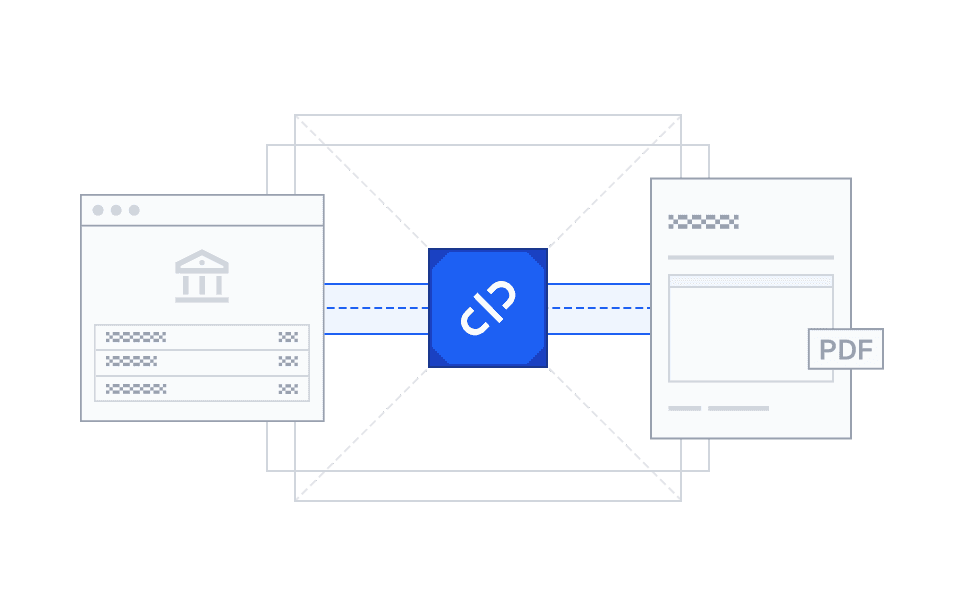
Image credit: docubrew.com
The problem is in repetition.
Think about an accounting company receiving monthly PDFs from multiple clients. One client utilizes Chase one, and the other Wells Fargo. Others send statements from Bank of America or Capital One.
The same procedure is repeated every when you open a PDF file and manually enter each transaction.
A converter for bank statements could alter the workflow so that it’s not transcription but review. Docubrew removes transaction information from the statement itself rather than estimating the financial value creating structured files that can be reviewed before being used. As the volume of documents increases the distinction between them becomes more crucial.
Batch Processing Modifies the Equation
For occasional conversions, it may be reasonable to separate the files. Accounting firms typically have to contend with a very different reality. Docubrew permits multiple statements to be uploaded and processed in one batch, with distinct results. The company can process many documents from clients without having to manually build each transaction table.
If the accounting workflow requires CSV files The user is able to change the bank statement into CSV prior to beginning the process.
Scanned paper statements can’t be automatically excluded either. Docubrew offers OCR for scanned pdfs. This is useful when a client has an assortment of native PDFs and scans in their documents from the past.
Make Outputs for Accounting Work Ahead
It’s not the end of the process. The transaction will usually need to be sent to somewhere.
Docubrew can export CSV, Excel, and QBO. For a team that needs to move a bank statement to Quickbooks, QBO provides an available output option alongside the more general spreadsheet formats.
Companies that regularly convert bank statement into Quickbooks on a regular basis will have a regular process to receive the statements after processing them, as well as checking the information extracted. They also can prepare the required files to facilitate the accounting workflow.
Human oversight is crucial. Automation can eliminate repetitive transcription, but bookkeepers remain responsible for checking financial information and doing the accounting tasks correctly.
Information from clients is a Workflow Flow Decision in Itself
A higher volume of documents also implies that you must handle more sensitive client information.
Docubrew offers two different processing options. Windows desktop applications can convert locally. Files can remain on the computer. Cloud storage is encrypted uploads and Docubrew states that uploaded and converted files are deleted immediately after 24 hours.
An accounting firm can select the method that best fits the requirements of its internal handling.
Scale-based Processes, not Repetitive Work
The increasing use of bookkeeping procedures should result in more financial documents. This should not mean that it automatically allows more copy and paste work.
It is vital to determine whether the process that worked for five clients can be used for 50 clients.
By standardizing how statements are read, converted, viewed and prepared for accounting software, companies can build a workflow designed to be recurring rather than making every PDF a brand-new manual project.