
A pump station might seem like a straightforward utility structure from the outside, but in practice, no two projects are exactly the same. A pump station may be required to transport wastewater from a housing development uphill, and a different site may require water pressure to be maintained over commercial structures with rising and falling elevations. Some projects are municipal, others are industrial or private each with distinct design requirements as well as longer-term operational goals.
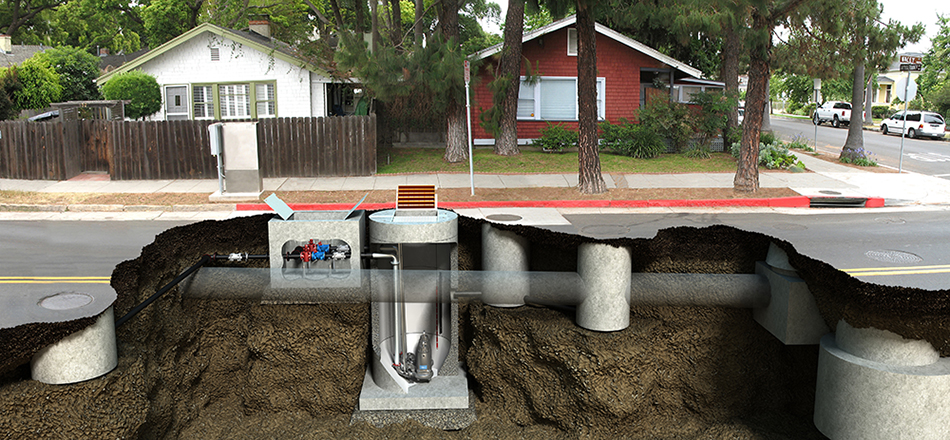
Pumping systems cannot be designed to suit all. A successful station has to be built around the realities of the site, its conditions of the flow, the ownership requirements, and the future of the property it serves. Romtec Utilities takes this perspective and creates every pumping package systems to satisfy the unique needs of the project instead of forcing it fit into a generic system.
Good design for pumping is about more than simply moving water
Pumping stations are designed to pump wastewater and water in instances where gravity isn’t enough. A system that works isn’t enough. It also has to be easy to operate and conform to all laws and regulations, both state and local. It must work in real life, not just on paper.
It covers everything starting from the structural layout to the size of the wet well, to electrical equipment, controls, communication systems, and access for workers. The system is likely to be afflicted by operational problems for years should even one aspect not planned properly. This is one reason engineers and owners place the most importance in working with top lift station design experts. Experience is crucial when trying to balance longevity, hydraulic performance, budget, and limits of the site.
Romtec Utilities blends these different disciplines in one place. It manages the structural, mechanical and electrical components of the station as a system, so customers don’t have to coordinate different vendors. The single-source model can simplify and speed up the procurement process and also speed up installation.
Package pumping systems can reduce the complexity when designed correctly
A packaged pumping system simplifies infrastructure projects because it incorporates the most important components into one coordinated solution. The real value lies in how well the package has been developed. Systems that are not designed to be compatible can lead to performance issues, over-sized equipment and unnecessary maintenance costs, or longer-term problems.
Romtec Utilities treats each package as a customized solution not merely a catalog item. That means selecting the right pumps, controls, valves as well as enclosure options based on real needs of the site. This includes thinking about how the system will work to be maintained, monitored and monitored. In the case of utility infrastructures, thoughtful coordination from the beginning of the design phase can often avoid bigger issues later.
Booster pump stations address a different kind of infrastructure problem
It’s not the case that every project requires wastewater. In many projects, maintaining water pressure can be just as crucial as moving water. In this situation booster pump stations are essential. They keep water flowing efficiently through a distribution system regardless of pressure issues caused by changes in elevation, lengthy pipeline runs or high demand.
The design of booster systems are generally different from other types of systems. They could require control structures, variable-frequency drives, SCADA integration and telemetry. Romtec Utilities creates these stations with the customized mindset that is used to design wastewater systems. The end result will be functional and operationally.
Better planning can lead to better long-term results
Romtec Utilities offers early design assistance to customers. This is one of its most valuable features. The initial support for design and engineering allows teams working on projects to understand the scope, configuration, and cost of an installation before they get too far into the procurement or construction. Developers, consultants and public entities can greatly benefit from this.
The planning process is crucial to the success regardless of whether it’s a wastewater lift station, a pumping package system or one of the many custom booster pump stations. The ideal design partner will provide more than just provide equipment. They can also help you design an option that is durable that is suitable for the site, meets the owner’s needs and is durable over time.
In the realm of utility work the most reliable systems are usually those that nobody notices since they work. The reliability of this system isn’t something that simply occurs. It is the result of thoughtful engineering, strong coordination, and the knowledge to design each system around the exact demands of the task.